
Eight-node architecture is an ownership and resilience decision
An agency managing $20,000 or more in daily advertising spend needs to know which client, payer, operator, destination, and dataset belongs to every campaign. Eight well-defined operating nodes can make that responsibility easier to manage. Eight accounts created without a clear ownership model can make it worse. The purpose of segmentation is to contain operational mistakes, protect client data, and accelerate diagnosis, while preserving truthful business relationships.
The commercial phrase Enterprise BM Nolimit should never be interpreted as an official guarantee of unlimited account creation, unlimited spending, or protection from enforcement. Business portfolio eligibility and account capabilities must be checked in the actual platform environment. Meta provides partner-access and permission-management workflows, and it describes two-factor authentication as a protection for business portfolios. Those documented controls are a sound starting point for an agency architecture. [S1][S2][S3]
This article presents an original eight-node reference design. It does not claim to reproduce Meta's internal asset graph or predict how enforcement propagates. Related assets may remain related for legitimate platform review even when the agency separates their internal operations. A security boundary protects authorized workloads; it does not erase the underlying advertiser, payer, ownership, or policy obligations.
Define a node by its business boundary
A node is a documented unit of ownership, authorization, budget responsibility, and operational response. Depending on the agency's contracts and platform-supported structure, it may correspond to one client business or a clearly bounded brand operation. It is not necessarily one personal profile or one ad account. The mapping must be chosen from genuine business relationships and supported platform permissions rather than a desire to obscure connections.
For the worked example, assume eight separate client businesses, each with authorized advertising assets and a $2,500 daily planning budget. Total planned spend is $20,000 per day. The clients retain ownership of their business assets and provide the agency with the minimum partner permissions required for its work. This is an illustrative design choice, not a claim that every existing client arrangement can be reorganized without review or migration effort.
| Node | Planning budget | Accountable owner | Core internal boundary |
|---|---|---|---|
| A | $2,500 per day | Client A | A's campaigns, evidence, and reporting |
| B | $2,500 per day | Client B | B's campaigns, evidence, and reporting |
| C | $2,500 per day | Client C | C's campaigns, evidence, and reporting |
| D | $2,500 per day | Client D | D's campaigns, evidence, and reporting |
| E | $2,500 per day | Client E | E's campaigns, evidence, and reporting |
| F | $2,500 per day | Client F | F's campaigns, evidence, and reporting |
| G | $2,500 per day | Client G | G's campaigns, evidence, and reporting |
| H | $2,500 per day | Client H | H's campaigns, evidence, and reporting |
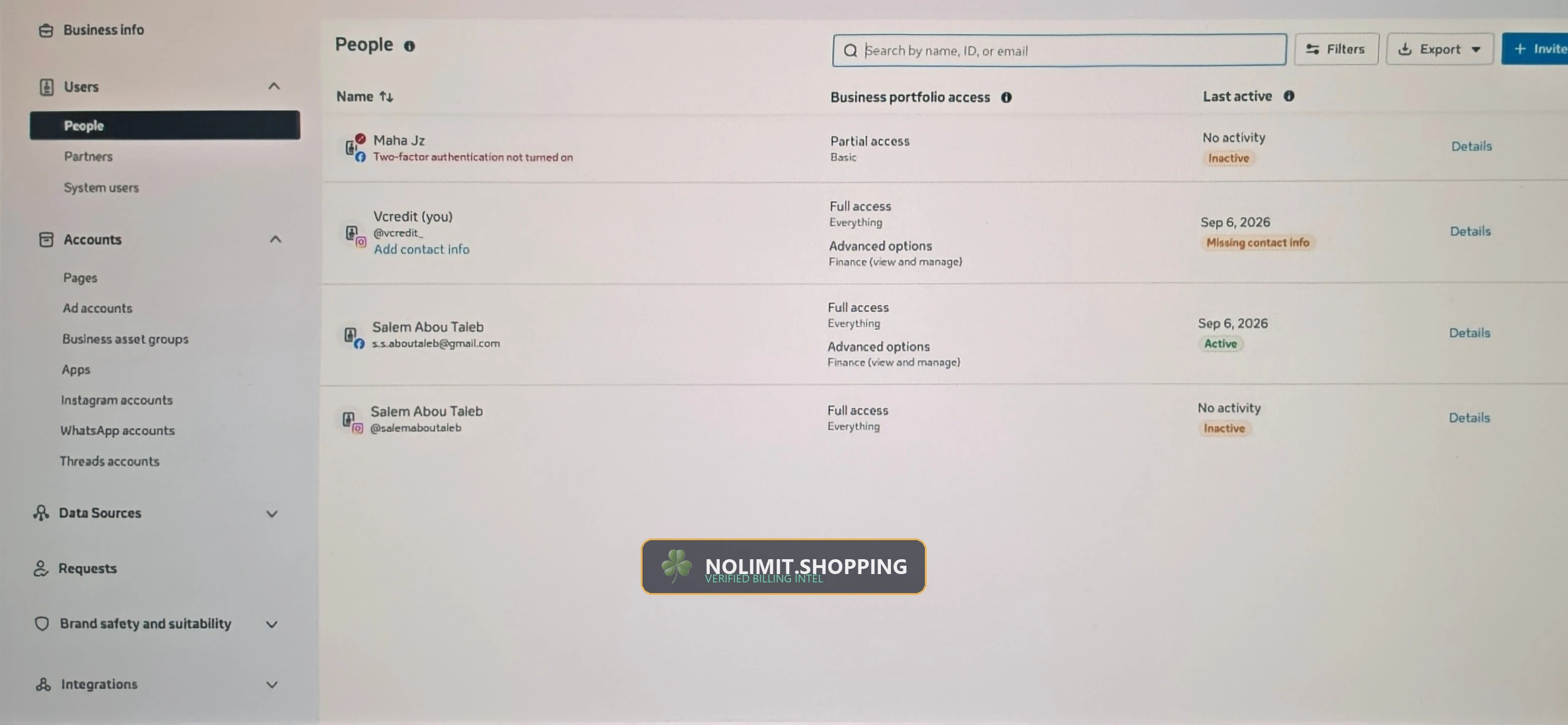
Every node record should identify its business owner, authorized payer, approved destinations, assigned operators, support contact, and data-handling requirements. Shared services must be listed explicitly. A central agency reporting service can serve all nodes, but its cross-client access creates a dependency that requires stronger controls. Calling a component shared is useful only if someone is responsible for its failure modes.
Model dependencies before claiming isolation
Build a graph whose vertices are business assets and operational services. Edges represent documented dependencies such as operator access, billing responsibility, data access, and campaign deployment. Label the edge type and scope. A creative repository dependency has different implications from a payment-facility dependency. Do not flatten all relationships into a vague risk score that hides which control can actually reduce exposure.
Consider an operator who can edit campaigns for A and B but cannot access C through H. A compromised session for that operator exposes a smaller set of editing permissions than an agency-wide administrator session. However, a central finance administrator or deployment credential could still create a broader incident. Segmentation should be assessed against each credential and service, not simply against the number of portfolios visible in a dashboard.
Define the reachable authorized assets for credential c as R(c). A simple internal blast-radius measure is the sum of daily budgets for assets in R(c), with duplicate assets counted once. This measures budget potentially exposed to that credential's misuse; it is not a prediction of actual financial loss. Separate read, edit, billing, and administrative scopes because a credential that reads reports cannot necessarily initiate the same damage as one that changes payment settings.
Quantify independent and common-cause risk separately
Assume, purely for illustration, each node has a 2% probability of an independent operational outage on a given day. With eight nodes, the expected number affected is 8 × 0.02 = 0.16. The probability of at least one affected node is 1 − 0.98^8, approximately 14.92%. This higher portfolio event probability is compatible with a smaller impact per isolated event. More nodes create more possible incidents, even when each incident is narrower.
Now add a 1% probability of a common-cause outage that affects all eight nodes. Assume the independent node event occurs only when the common event has not occurred. The marginal outage probability for a node becomes 0.01 + 0.99 × 0.02 = 2.98%. Expected affected nodes become 0.2384. Expected daily spend exposure is $20,000 × 0.0298 = $596, if exposure means the full daily plan of each affected node.
Those figures are scenario calculations, not observed platform ban rates. Their lesson is architectural: adding nodes does not eliminate common-cause risk. A shared issuer problem, central permission mistake, defective destination template, or unauthorized access to a powerful agency identity can affect the whole portfolio. Identify and test those dependencies before marketing an eight-node topology as resilient.
For equal pairwise correlation rho between node outage indicators with marginal probability p, the variance of their sum is n × p × (1 − p) × [1 + (n − 1) × rho]. This formula requires the stated symmetric assumptions and a feasible correlation model. At n = 8 and rho = 0.25, the variance is 2.75 times the independent case with the same p. Correlation changes concentration of outcomes even when expected affected count is unchanged.
Translate interruption into business impact honestly
One $2,500-per-day node interrupted for six hours has $625 of planned spend opportunity exposed under uniform pacing. If the agency estimates marginal contribution at 25% of spend and none of that opportunity can be recovered, the modeled contribution loss is $156.25. A six-hour portfolio-wide event under the same assumptions exposes $5,000 in spend and $1,250 in contribution. Actual campaign schedules and recoverability can materially change both estimates.
Do not add unspent media to lost revenue as though both were losses. The media expense was not incurred during the pause. Model foregone incremental contribution, incident labor, contractual penalties where applicable, and recovery costs separately. If later delivery recovers half the missed contribution without reducing efficiency, the modeled permanent loss falls accordingly. Finance should own the valuation assumptions, while operations owns the measured interruption timeline.
The same discipline applies to restrictions. A platform restriction is not interchangeable with a temporary internal service outage. Recovery authority, timeline, and permissible actions differ. An architecture can help identify the affected owner and evidence; it cannot guarantee that an enforcement decision remains confined to one internal node or promise a fixed time to reversal.
Implement least privilege with named people and clear roles
Use platform-supported partner access for agency work and named identities for the people performing it. Assign campaign editing, reporting, billing, and administrative responsibilities according to need. Require the supported strong authentication controls and maintain an offboarding checklist. Avoid shared credentials, copied session material, and personal identities whose relationship to the business cannot be established.
A practical role model separates the buying lead, finance owner, business administrator, and incident coordinator. The buying lead approves campaign changes within the client's budget mandate. Finance approves payment changes and reconciles invoices. The business administrator manages authorized access. The incident coordinator maintains the case record and communication timeline. Small teams can assign multiple roles to one person, but should make the resulting concentration visible.
For high-impact changes, use a second-person review: new partner access, large budget increases, payment-method changes, and broad credential grants. Approval should be specific to the action and expire if not used. A standing chat message saying that an operator can do anything is poor evidence of client authorization. Keep the decision attached to the relevant node and include a reason that a future reviewer can understand.
Make tenant boundaries enforceable in the internal system
The proposed NoLimit Shopping Proprietary Ledger should require a tenant identifier on every order, asset record, evidence reference, and financial event. Authorization must derive the tenant from the authenticated actor's permitted scope, then compare it with the requested object. Merely accepting a tenant identifier from the browser does not establish authorization. Every read and write path needs an explicit boundary check.
Internal uniqueness constraints should include tenant scope where appropriate. A transaction reference unique only within one client must not collide with another client's record. Conversely, a genuinely global external payment identifier should remain globally unique to prevent duplicate accounting. Decide which identifiers belong to which scope in the data contract rather than guessing during incident response.
type Scope = { actorId: string; tenantIds: ReadonlySet<string> };
type Asset = { tenantId: string; assetId: string; state: 'active' | 'held' };
function assertReadable(scope: Scope, asset: Asset): void {
  if (!scope.tenantIds.has(asset.tenantId)) throw new Error('Access denied');
}
function assertEditable(scope: Scope, asset: Asset, canEdit: boolean): void {
  assertReadable(scope, asset);
  if (!canEdit || asset.state !== 'active') throw new Error('Change blocked');
}
// Authorization sketch: production code must enforce scope at every data boundary.
The proposed NoLimit Shopping Proprietary ACID Engine should atomically record an approved internal change and its audit entry. It should not be described as proof that an external platform accepted that change. An external action needs its own request state, response, retry policy, and reconciliation. Separate requested, acknowledged, verified, and failed states so that an internal success message cannot conceal an unresolved external operation.
Quarantine means controlled investigation
When suspicious activity appears, place the affected internal workflow on hold, preserve evidence, and revoke compromised access through supported controls. Quarantine should stop unauthorized changes and prevent accidental propagation of a defective release. It should not move rejected campaigns into another account or conceal ownership. Continued activity must remain within the platform's permissions and the client's authorization.
Use a four-stage incident sequence: identify the affected scope, contain the operational change, establish the root cause, and approve recovery. For a mistaken budget deployment, containment may mean restoring the last authorized budget and blocking the deployment credential. For an identity compromise, it may mean account recovery and role review. For a platform restriction, it means preserving the notice and using the official review process where available. [S4]
Recovery criteria should be written before the incident. Require confirmed owner control, reviewed permissions, reconciled financial activity, resolved internal defects, and a documented decision on eligible campaign activity. Do not silently reopen a held node when a timer expires. A timed reminder is useful; an automatic assumption that the underlying problem has disappeared is not.
Keep billing separation truthful and operationally useful
Where each client is the payer, map its invoices and authorized payment arrangement to its own node. Where an agency legitimately pays on behalf of clients, record that central relationship and its concentration risk. Internal allocation does not change the actual payer seen by the issuer or platform. The ledger should show both the external obligation and the client-level attribution without pretending they are independent payment facilities.
If eight nodes share $40,000 of usable payment capacity and collectively spend $20,000 daily, uniform-pacing coverage is two days before other obligations. Giving each node a nominal $10,000 internal allowance does not create $80,000 of real capacity. Enforce an aggregate treasury constraint and client-level authorization limits simultaneously. Reserve movements must be recorded so that two operators cannot spend the same unallocated headroom in parallel.
Test the boundaries with realistic failure cases
Before launch, test that a user authorized for A cannot read B's order, download B's evidence, or submit a change against B's asset identifier. Test reporting exports as well as interactive pages. A system that hides another client's navigation menu but returns its records when given an identifier has failed the boundary. Negative authorization tests are essential because successful authorized requests do not prove isolation.
Run a tabletop exercise involving a compromised buyer identity, a central issuer outage, a duplicate payment notification, and a defective destination release. Ask who can stop the relevant action, what evidence is available, and which clients are exposed. Measure detection and containment times. The objective is to find gaps in authority and observability before a real event, not to manufacture an impressive but unsupported uptime claim.
Define a recovery-time objective for the internal services the agency controls and a separate escalation target for external-platform cases. Do not combine them into one guarantee. A thirty-minute internal access-revocation target can be meaningful if staffed and tested. A thirty-minute promise to reverse a platform restriction is outside the agency's control unless a specific enforceable arrangement actually supports it.
Use a launch scorecard that exposes common dependencies
The launch review should confirm ownership, partner permissions, named operators, authentication coverage, approved destinations, payment responsibility, and tenant-boundary tests for every node. A second section should list shared dependencies and their owners. Include reporting, finance, deployment, support, and evidence storage. A blank common-dependency section is not evidence of perfect independence; it usually means the mapping exercise is incomplete.
Track the largest credential blast radius, percentage of high-impact changes independently reviewed, stale access grants, unresolved ledger exceptions, and elapsed time since the last incident exercise. These are actionable measures. Counting business portfolios or profiles is merely inventory. Improvement means fewer unnecessary privileges, faster diagnosis, and more accurate financial control under the same legitimate business relationships.
The NoLimit Pro Tools Suite could support a client-side topology worksheet that accepts redacted asset labels and budget assumptions, calculates exposure, and exports a review checklist. It should not request passwords or pretend to discover a platform's private enforcement graph. For current NoLimit Shopping product scope and written operating terms, contact the Admin Desk at @markzuckerads. Evaluate every proposed configuration against actual ownership and supported access.
Migrate into the topology without losing accountability
An existing agency should begin with a read-only inventory and a signed mapping of current ownership. Identify which clients already own their assets, which arrangements require clarification, and which permissions are broader than the contract needs. Do not move or reassign assets merely to make the diagram look symmetrical. Some platform objects may have restrictions on changes, and the supported process must be confirmed for the specific object before any migration is planned.
Choose one legitimate client scope for a pilot. Export its current role assignments and financial references, record the intended changes, and obtain the approvals required by the actual business relationship. Define a rollback for internal configuration changes and a separate contingency for external actions that cannot simply be reversed. The migration plan should state which campaigns may continue, who can pause the work, and what evidence must be checked before the client is declared operational.
During the pilot, compare reports from the previous and revised internal mappings for a closed reporting interval. The same underlying spend should not appear twice, disappear, or move between clients because an identifier was reassigned. Verify that historical evidence remains attributable to the original owner and time period. A new internal node label should never rewrite who was responsible for an earlier invoice or campaign decision.
After the pilot, review operator effort as well as security outcomes. Excessive manual switching and ambiguous roles can encourage shortcuts, so the interface should make the current client and permitted action obvious. Provide a clear route for requesting temporary additional access with an expiry and reviewer. Measure whether the revised structure actually reduces unnecessary privileges without preventing legitimate work or delaying urgent client decisions.
Roll out subsequent nodes only after those checks succeed. Keep a migration register with scope, date, approver, unresolved exceptions, and rollback status. The resulting architecture may be uneven because clients have different supported arrangements. That is acceptable. The engineering objective is a truthful and enforceable boundary around each business, not eight identical boxes whose apparent symmetry conceals a shared administrator, unexplained ownership, or an untested financial dependency.
Sources and evidence scope
- [S1: Meta — Give a partner access to business assets](https://www.facebook.com/business/help/1717412048538897). Public indexed workflow reviewed September 23, 2026.
- [S2: Meta — Add people and assign business assets](https://www.facebook.com/business/help/2169003770027706). Public indexed permission-management guidance.
- [S3: Meta — Two-factor authentication for your business portfolio](https://www.facebook.com/business/help/865384580786591). Public indexed security guidance.
- [S4: Meta — Request a review for a restricted advertising account](https://www.facebook.com/business/help/530209463124901). Public indexed scope of review requests; no containment guarantee inferred.