
Choose the operating arrangement before buying the account label
A TikTok agency arrangement can provide useful services: coordinated onboarding, delegated campaign operations, finance administration, and a documented support path. Those benefits depend on the actual contract, permissions, account configuration, and counterparties involved. The label TikTok Agency Ad Accounts does not by itself establish unrestricted global targeting, unlimited spend, immunity from payment checks, or tax exemption. Enterprise procurement must verify each claimed capability separately.
Self-serve describes an operating route, not a synonym for low quality. A capable in-house team may prefer direct control and transparent billing. An agency-managed arrangement may be appropriate when the service demonstrably improves execution or covers needs the buyer cannot efficiently manage internally. The decision should compare supported capabilities and total operating cost under the same legitimate advertiser identity, rather than assume that one label removes platform requirements.
Treat geography as an intersection of permissions
TikTok's available-location guidance says targeting options depend on the country or region used to register the Ads Manager account. The live account and relevant placement determine which destinations can be selected. That supports an account-specific eligibility check, not a universal promise that an agency arrangement unlocks every market. Product restrictions and campaign approvals can further narrow what is permissible even when a location appears in the interface. [S1](https://ads.tiktok.com/help/article/placements-available-locations)
Define the launchable market set as the intersection of platform-available locations, approved product locations, the client's authorized markets, and operationally supported destinations. For a campaign to launch in a market, all four conditions must hold. Localization readiness and the ability to fulfill the advertised offer matter as well. A selectable country is not proof that the business can lawfully sell there or support customers there.
Use a dated market matrix instead of the word global. For each intended market, record the account, placement, product category, evidence of any required approval, approved destination, and launch owner. Mark unverified entries as unverified. Do not turn absence of a documented restriction into affirmative permission. Refresh the matrix when the account configuration, product, placement, or policy changes.
| Capability | Evidence required | Unsupported shortcut to avoid |
|---|---|---|
| Targeting a market | Current account and placement eligibility | Assuming all agency accounts share one market list |
| Advertising a restricted product | Applicable approval and eligible destination | Treating a selectable location as product permission |
| Higher spend | Current supported capacity and funded plan | Equating an account label with unlimited delivery |
| Monthly invoicing | Approved arrangement and actual terms | Treating every agency relationship as approved credit |
| Tax treatment | Correct entity details and applicable documentation | Calling a billing configuration universally tax-exempt |
| Support | Named process, hours, and service scope | Promising a platform outcome outside the provider's control |
Verify the relationship between advertiser, agency, and asset owner
Before onboarding, identify the legal advertiser, the asset owner, the agency providing services, and the party responsible for payment. These can be different entities, but the relationship must be documented. Ask who can grant and revoke access, who receives invoices, who can export reports, and what happens if the relationship ends. A convenient login does not establish durable business control.
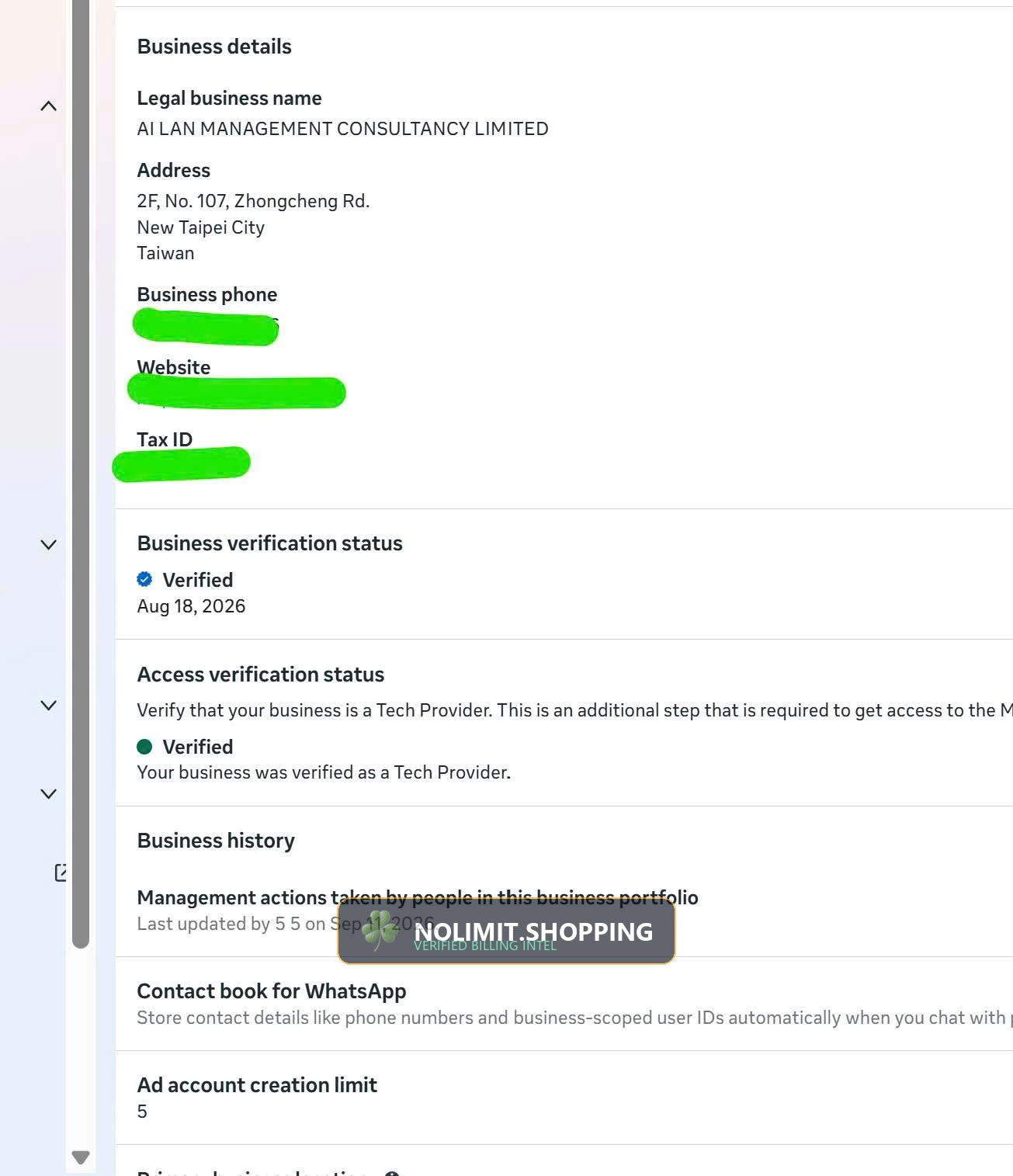
TikTok Business Center provides defined roles and permissions, including finance-related capabilities. Use supported access arrangements and grant only the responsibilities needed for the service. The advertiser should understand which privileges the agency holds and which decisions remain with the client. Named people and accountable roles are easier to audit and revoke than a shared identity circulated among buyers. [S2](https://ads.tiktok.com/resources/help/article/about-business-center-roles-and-permissions)
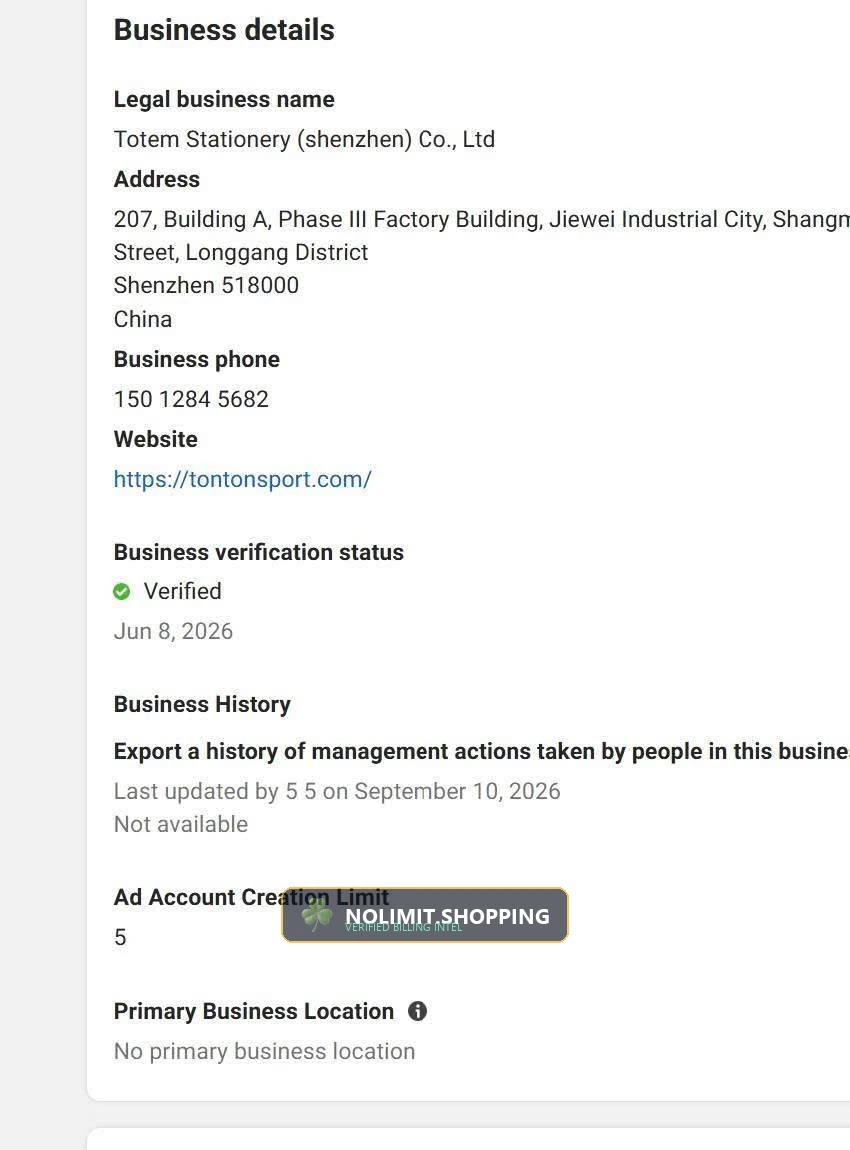
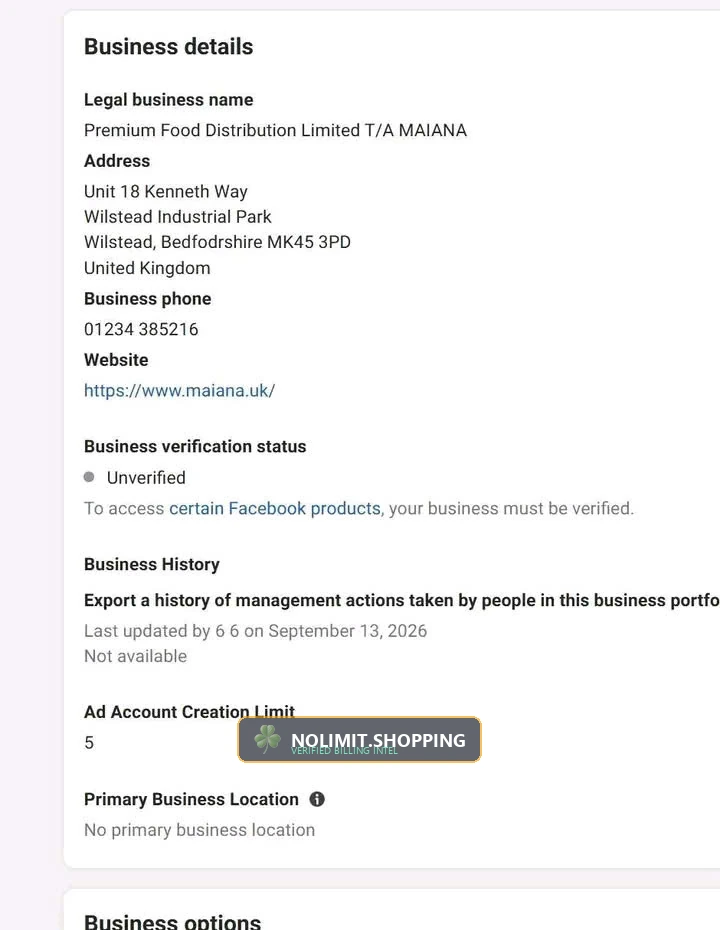
The procurement record should include current ownership evidence, authorized partner scope, billing responsibility, support escalation, and offboarding rights. If a supplier cannot explain these clearly, a low setup price does not resolve the uncertainty. A high-spend client needs a relationship that remains intelligible during a payment dispute or personnel change, not merely a campaign that runs on the first day.
Separate budget, spend cap, available balance, and payment threshold
A campaign budget is the advertiser's delivery instruction within supported platform behavior. A spending cap limits available consumption under a particular arrangement. A prepaid balance is funded value available under the relevant billing rules. A payment threshold governs collection timing. These variables interact, but they are not interchangeable. Raising a budget does not create payment capacity, and a larger collection threshold does not establish unlimited daily spend.
TikTok documents manual payment, automatic payment, and monthly invoicing as distinct billing options. Monthly invoicing is available to eligible businesses under its terms; the documentation describes invoice timing and payment due dates rather than a universal right for every account. The current account configuration and any written agreement must be checked before planning around a particular mode. Do not infer a supported migration path from a seller's informal assurance. [S3](https://ads.tiktok.com/resources/help/article/tiktok-billing-options?lang=en-GB)
For an illustrative approved spending facility with $90,000 currently available and planned consumption of $20,000 per day, uniform-pacing headroom is 4.5 days. A due date thirty days away does not make that facility sufficient for thirty days of consumption. If the operating plan requires earlier replenishment or a higher approved cap, arrange it through the supported process and confirm completion before increasing spend.
Evaluate monthly invoicing from current eligibility and contract evidence
TikTok's monthly-invoicing guidance describes application and approval requirements and determines limits case by case. It also distinguishes the spending facility from a general financing product. A third party cannot guarantee an approval simply by attaching an agency label to a listing. Ask for the actual approved arrangement, available capacity, payment responsibilities, and any conditions that could change the operating position. [S4](https://ads.tiktok.com/help/article/about-monthly-invoicing)
Public help pages can differ in scope or update cadence. Use the most relevant current account workflow and written agreement to resolve account-specific questions, and retain the support clarification when necessary. Do not combine a broad promotional page with a different region's billing guide to create an entitlement that neither source actually grants. The evidence should match the advertiser, location, and billing mode being proposed.
A finance review should model consumption, invoice generation, payment initiation, and restoration of usable capacity separately. The time at which a bank payment is sent may differ from the time at which the platform recognizes it. If the available balance is close to the planned consumption before replenishment is confirmed, hold the planned increase. A favorable contract term is useful only when the operational funding path supports it.
Compare agency and self-serve economics on the same basis
Assume monthly media spend of $600,000 and an agency management charge of 2%, producing $12,000 in fees. Suppose the service saves forty internal labor hours valued at $50 per hour, or $2,000. Suppose it also avoids twenty hours of genuinely unrecoverable delivery interruption. At $20,000 daily spend and a hypothetical 20% marginal contribution rate, each uniformly paced hour represents approximately $166.67 of contribution, totaling about $3,333.33.
Under those assumptions, quantified benefit is about $5,333.33, below the $12,000 fee. The arrangement may still have other measurable value, but the stated savings do not justify it alone. To close the remaining gap through incremental contribution, the provider would need to demonstrate approximately $6,666.67 more value under the same framework. This is an illustrative procurement calculation, not an assessment of an actual agency.
Do not value avoided interruption as the full unspent advertising amount. If the expense was not incurred, lost contribution is the relevant starting point, adjusted for later recovery and incremental costs. Similarly, a lower reported CPA may reflect attribution or lead-quality differences rather than a real financial gain. Compare accepted outcomes, settled revenue, and the complete service cost before claiming that one account arrangement is more profitable.
Define total cost beyond the management percentage
A complete comparison includes setup charges, recurring management fees, funding and conversion costs, reporting effort, unused deposits, withdrawal conditions, support coverage, and transition costs. Some are direct expenses; others tie up capital or create contingent exposure. Keep them separate so that the buyer can see what is certain and what depends on future events. An all-in percentage without a denominator or scope is difficult to audit.
For a deposit-based arrangement, ask who holds the funds, when they become usable, what deductions apply, and how unused funds are returned. Distinguish a balance shown in a supplier interface from a confirmed balance in the platform. Reconcile transfers and consumption using source records. A supplier's internal balance is a commercial claim until the relevant obligation and supporting evidence are understood.
The proposed NoLimit Shopping Proprietary Ledger should be specified to track customer funds, supplier obligations, platform allocations, fees, and refunds separately. It should preserve source references and correction history. The NoLimit Shopping Proprietary ACID Engine can keep related internal entries consistent, but cannot guarantee that an external agency or platform has recognized a transfer merely because the internal journal posted successfully.
Reject universal tax-exemption promises
Tax treatment follows the actual transaction, entities, location, use, and applicable rules; it is not an inherent feature of an agency account label. TikTok's EU and UK guidance describes the relevance of business location, commercial use, and valid tax information, with different treatment discussed for different cases. The existence of a tax identifier does not support a universal statement that advertising purchases are tax-free. [S5](https://ads.tiktok.com/help/article/eu-uk-vat?lang=en)
A provider should state what it invoices, which entity issues the document, and which supporting information is required. A qualified tax reviewer should determine the buyer's obligations for the actual arrangement. Do not change or misrepresent the advertiser's location to obtain a different result. Also distinguish a charge not collected by a supplier from the absence of any tax obligation; those are not necessarily the same conclusion.
For a purely hypothetical invoice with $100,000 of media and an assumed 20% charge, immediate cash outflow is $120,000. If the business later recovers some or all of that amount under applicable rules, timing still matters. A receivable for a potential recovery is not cash available for tomorrow's campaign. This arithmetic illustrates cash planning only; the assumed percentage does not state the correct rate or recoverability for any jurisdiction.
Zero hold is a claim that needs a precise definition
A seller might use zero hold to describe rapid internal balance allocation, no contractual reserve, or a particular historical payment experience. Those are different propositions. None establishes that the platform, issuer, bank, or other counterparty will never apply a review or delay. Require the provider to define the claim's scope, exclusions, measurement window, and responsible party before incorporating it into a funding model.
For automatic payment, account eligibility and the payment instrument still matter. The first batch of this suite established that authentication, authorization, settlement, and available capacity are separate states. Apply that same discipline here: a provider's acknowledgment of funds is not necessarily platform availability, and platform availability is not a guarantee of uninterrupted delivery. Model the points at which human action or external confirmation can be required.
A useful service commitment concerns an action the provider controls, such as acknowledging a complete funding request within a stated staffed interval. A commitment to guarantee every external approval is a different and much harder claim. Enterprise buyers should favor measurable operational obligations with evidence and clear remedies over language that promises all risk has disappeared.
Implement a launch gate that preserves the evidence boundary
type MarketGate = {
  platformAvailable: boolean;
  productApproved: boolean;
  clientAuthorized: boolean;
  destinationReady: boolean;
};

function launchableMarket(g: MarketGate): boolean {
  return g.platformAvailable && g.productApproved && g.clientAuthorized && g.destinationReady;
}
// Verification gate for regional advertising eligibility and governance.
The code intentionally uses an intersection. One favorable field cannot compensate for a failed or unknown prerequisite. In production, represent unknown separately from verified false or true, and attach expiry dates and evidence references. A missing record should block launch until reviewed. The calculation does not query TikTok, establish a license, or grant an advertiser a new market.
A proposed NoLimit Pro Tools Suite market-readiness worksheet can expose these conditions without collecting credentials. It can help a buyer compare two documented arrangements and identify exactly which capability remains unverified. Do not label the output platform-approved unless the approval actually came from the relevant official process. Internal readiness and external authorization must remain distinguishable in both the interface and the article's screenshots.
Scale through authorized capacity and measured economics
A spend increase should follow a documented campaign objective, current funding capacity, appropriate approvals, and observed marginal performance. There is no universal schedule that makes every account safe to scale. The director should specify how much additional spend is authorized, what result would justify continuation, and when finance must recheck capacity. A change in budget should not silently exceed a client's contract or an agency's approved funding limit.
At a $25 CPM, 1.5% CTR, and 4% accepted conversion rate per click, accepted-outcome CPA is about $41.67. A 20% CPM increase with unchanged downstream rates raises CPA to $50. If the net contribution before advertising is $55 per outcome, the remaining contribution falls from about $13.33 to $5. A higher spending allowance is commercially useful only if the marginal traffic remains worth buying.
Measure delivery, accepted outcomes, available payment capacity, and unresolved notices during the review window. If performance deteriorates, investigate auction mix, creative, destination behavior, and measurement before blaming the account arrangement. If a restriction appears, preserve the notice and use the official resolution process. Increasing capacity or changing service providers does not authorize continuing activity that the platform has prohibited.
Plan exit, ownership continuity, and data portability
The contract should explain what happens to assets, reports, balances, and access when the relationship ends. Ask which objects can remain with the client under the supported platform model and which are tied to the provider's arrangement. Do not assume that every asset can be transferred. The exit plan should be reviewed before the business becomes dependent on a configuration whose ownership it does not understand.
Schedule periodic exports of permitted business records and reconcile them with the client's own accounting and accepted-outcome data. Retain campaign change history and approval references where supported. Limit the provider's access after termination and verify that former personnel can no longer act for the client. A vendor handoff should use official access procedures, not a package of another person's passwords or authenticated session material.
If a transition is required, begin with an inventory and a supported migration plan. Identify irreversible actions and data that may not move. Run a limited authorized pilot, compare reporting definitions, and preserve historical attribution context. The goal is business continuity under truthful ownership, not recreating an environment in order to bypass an unresolved platform decision.
Request evidence that can survive a finance review
For NoLimit Shopping, request the exact current listing, advertiser requirements, ownership model, market scope, billing arrangement, and written service terms from the Admin Desk at @markzuckerads. Ask for evidence tied to the configuration being sold, not a different customer's best historical result. Procurement is complete when the agency can explain what it controls, what the platform controls, and which assumptions still require verification.
A sound decision may favor an agency arrangement or direct self-serve operation. The result should follow the documented requirements of the advertiser and the measured value of the service. The enterprise standard is supported capability, funded capacity, accurate tax information, and durable authorized access. That standard remains useful after the campaign scales, the payer changes, or the provider relationship ends.
Pilot the service before making it a portfolio dependency
A pilot should test the specific service promise with one authorized, eligible campaign scope. Establish the advertiser's ownership, supported market, payment route, reporting definitions, and exit process before funding it. Choose acceptance criteria that the provider can actually influence, such as the accuracy of onboarding records, timeliness of complete support responses, and successful reconciliation of the first closed billing period. Campaign profitability alone cannot validate the quality of every administrative control.
At the end of the pilot, compare the proposed arrangement with what actually occurred. Were invoices issued by the expected entity? Did funds become usable on the documented timeline? Could the client see the agreed reports and revoke the granted access? Were fees and any tax lines consistent with the written terms? Investigate discrepancies before scaling the relationship. A pilot is valuable because it turns a broad sales description into concrete evidence about the operating arrangement the enterprise is about to depend on.
Sources and evidence scope
- [S1: TikTok — Available location targeting options by market](https://ads.tiktok.com/help/article/placements-available-locations). Official account-registration dependency; reviewed September 23, 2026.
- [S2: TikTok — Business Center roles and permissions](https://ads.tiktok.com/resources/help/article/about-business-center-roles-and-permissions). Official access and finance-role structure.
- [S3: TikTok — Available billing options](https://ads.tiktok.com/resources/help/article/tiktok-billing-options?lang=en-GB). Official billing modes and contractual qualifications; account-specific terms prevail.
- [S4: TikTok — About monthly invoicing](https://ads.tiktok.com/help/article/about-monthly-invoicing). Approval-based spending facility; no universal limit inferred.
- [S5: TikTok — EU and UK VAT](https://ads.tiktok.com/help/article/eu-uk-vat?lang=en). Tax-information requirements and distinctions. No rate table reproduced; obtain current advice for the actual transaction.